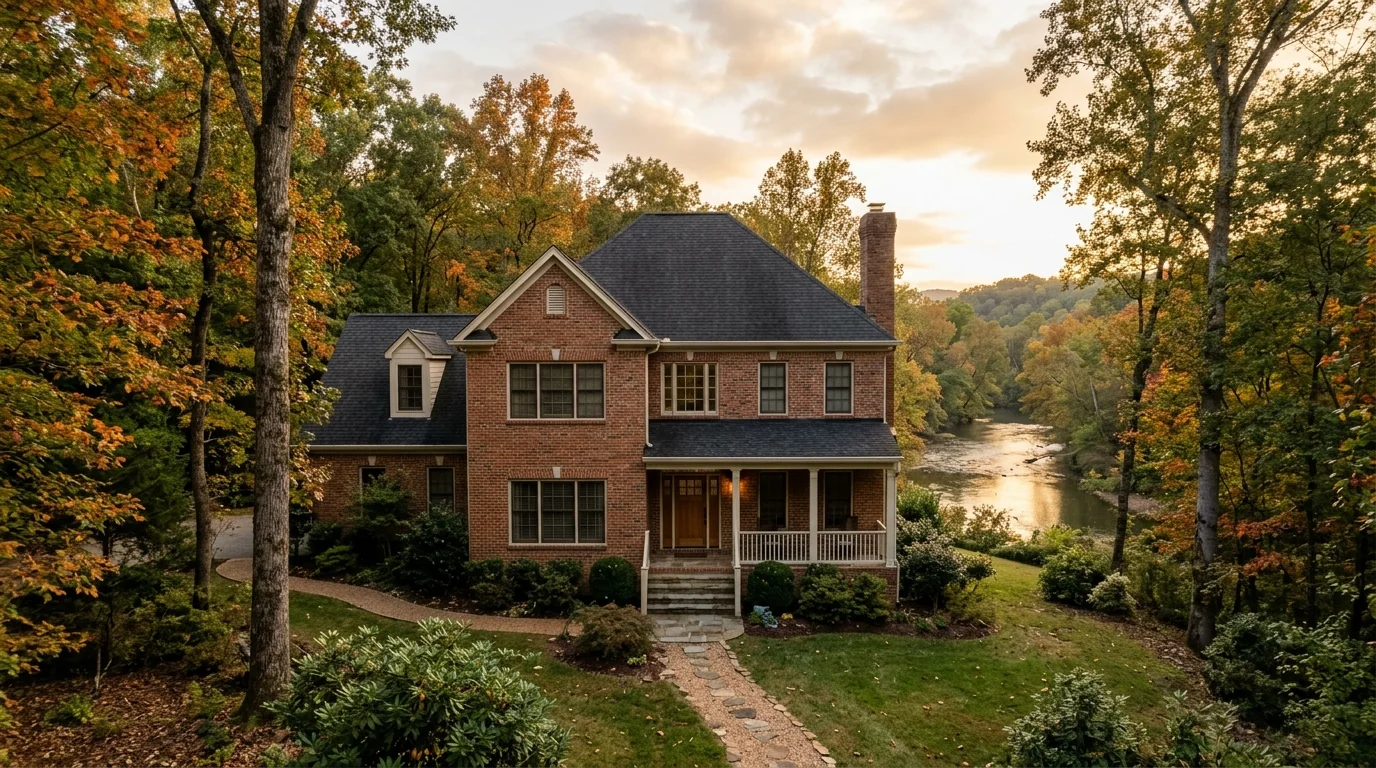
Service Area · Blount County
Foundation repair in Rockford, TN
Rockford is a small city in Blount County, Tennessee, part of the Knoxville metropolitan area. Its soil profile combines silty clay loam and eroded steep slopes that put constant stress on foundations. Homes here often show settlement, wall cracking, and crawl-space moisture problems tied to the local terrain. Understanding those site-specific conditions helps owners choose the right repair method and contractor.
Why Rockford Foundation Repair Is Different
Rockford is a small city of roughly 849 residents in Blount County, Tennessee, sitting within the Knoxville Metropolitan Statistical Area according to Wikipedia. What makes foundation repair here distinct is not size but site. The soil series mapped across Rockford by the USDA Natural Resources Conservation Service through USGS SSURGO data combine silty clay loam with eroded and steeply sloped phases. That combination behaves differently from flatter, sandier ground in other parts of the metro. Homes shift, piers settle, and crawl spaces collect moisture in ways that reflect this specific terrain. Before spending a dollar on repairs, homeowners need to understand what the ground beneath their slab or beams is actually doing.
Soil and Geology: Five Soil Series, One Problem
The SSURGO survey identifies five soil series under and around Rockford. Sequoia silty clay loam appears in a sloping, eroded phase. Emory silt loam sits in a gently sloping phase. Dandridge silt loam occupies a moderately steep phase. Alcoa loam shows up in an eroded sloping phase. Tellico clay loam is found in a severely eroded steep phase. Every one of these series contains meaningful clay content.
Expansive clay is the core mechanical issue. As Wikipedia’s article on expansive clay explains, these soils are “prone to large volume changes (swelling and shrinking) directly related to changes in water content.” In Rockford, that means spring rains cause soil to press outward against foundation walls and upward against floor beams. Summer dry spells then shrink the same soil away, leaving gaps where support used to be. That cycle repeats every year. Over a decade or two, footings migrate, piers crack, and wood beams begin to sag. Engineering solutions for expansive clay typically involve deep foundations or pile systems that reach below the active zone, as the same Wikipedia source notes.
Climate: Moisture Cycles Drive the Damage
Rockford shares the broader Knoxville metro climate pattern. Wikipedia’s Knoxville article puts annual precipitation at just under 52 inches, with a January average of 38.2°F and a July average of 78.4°F. That temperature swing, combined with nearly 52 inches of annual rain, creates the wet-dry-wet cycle that expansive soils exploit. Spring storms saturate the Sequoia and Emory series. Summer heat draws moisture back out. By late August, cracks appear in the soil around foundations. By October, rain refills those cracks and the cycle starts again. Homes with poor grading or vegetation pulling moisture from the soil see the worst effects.
Housing Era: Older Pier-and-Beam Construction
Blount County’s rural fringe, including Rockford, carries a housing stock that skews older. Pier-and-beam construction dominated residential building through much of the mid-twentieth century in this area, partly because sloped terrain made slab placement impractical on many lots. Older pier-and-beam homes rest on stacked block or poured concrete piers sitting directly on clay soil. When that soil moves, the piers move with it. Over time, wood beams absorb moisture from the crawl space, soften, and lose load-carrying capacity. Homeowners often notice sloping floors, sticking doors, or springy spots underfoot before they ever see an exterior crack. Recognizing this early saves significant repair cost. You can review common warning signs on the foundation problems overview page.
Rockford Neighborhoods and Foundation Patterns
Rockford is compact, so precise neighborhood boundaries matter less than micro-terrain and housing type. Based on the city’s geography and surrounding Blount County rural context, here are the areas where foundation patterns are most distinct.
- Rockford Town Center area. Older commercial-adjacent housing with mixed foundation types; some original pier-and-beam homes alongside postwar slab construction on flatter ground.
- Little Tennessee River corridor. Flood-adjacent lots with high seasonal moisture; crawl-space homes here face persistent humidity and wood decay more than structural settlement.
- Blount County rural east side. Steeper terrain dominated by Dandridge and Tellico clay loam phases; pier settlement and footing migration are the primary concerns.
- Highway 73 residential strip. Mixed-era homes along the commercial corridor; slabs on fill soil sometimes show differential settlement where fill depth varies.
- Old Maryville Pike corridor. Rural residential with older construction; pier-and-beam homes with original block piers are common and show more moisture-related wood damage than pure settlement issues.
- Foothills transition area. Properties at the base of the Appalachian foothills where Alcoa loam and Sequoia silty clay loam overlap; drainage control is a critical first step before any repair.
- Alcoa Highway adjacent neighborhoods. Higher traffic corridor with more recent infill; newer slabs occasionally show shrinkage cracking but fewer deep settlement issues than older housing stock.
- Blount County western rural fringe. Flattest terrain in the Rockford vicinity with Emory silt loam present; slower drainage leads to prolonged soil saturation and lateral pressure on crawl-space walls.
How to Find a Rockford Foundation Repair Contractor
Choosing a contractor for a Rockford job requires more than checking reviews. Four specific criteria should guide the evaluation.
Warranty terms that travel with the home. A transferable warranty matters because it turns a completed repair into a documented asset when the home sells. Ask specifically: how many years does the warranty cover, what does it exclude, and does it transfer to a new buyer without a fee? Contractors unwilling to provide written warranty language before signing a contract are a red flag.
An engineering letter, not just a repair estimate. For any structural repair involving piers, underpinning, or wall stabilization, a licensed structural engineer should review the scope and sign off on the repair plan. Some contractors include this as part of their process. Others skip it to reduce overhead. In Blount County’s clay-rich, sloped terrain, skipping the engineering review increases the risk that the repair addresses symptoms rather than the root cause.
Demonstrable local experience with these specific soils. Ask a prospective contractor which soil types they encounter most often in Blount County. If they cannot describe the behavior of Sequoia silty clay loam or explain how Tellico clay loam’s severely eroded steep phase affects pier placement depth, they may be importing techniques from flatter markets where clay behaves differently. Local experience is not a marketing phrase. It is a practical question about whether a crew knows what they are standing on.
Diagnostic discipline before any repair recommendation. A trustworthy contractor inspects before proposing. That means measuring floor slope with a level or laser tool, probing crawl-space moisture with a meter, photographing crack patterns and noting their direction and width, and checking exterior grading before naming a method. Contractors who lead with a repair proposal rather than a diagnostic report are more likely to oversell. Request an itemized written estimate that lists method, materials, labor, and permit costs separately.
What to Expect from a Rockford Inspection
A thorough inspection of a Rockford home covers four areas.
Exterior walk-around. The inspector examines foundation walls or visible piers for cracking, displacement, and spalling. They check grade slope to confirm water drains away from the structure. They note vegetation placement, since large shrubs and trees in Blount County’s clay-heavy soil draw moisture out unevenly and accelerate differential settlement.
Interior walk-through. Inside, the inspector looks for stair-step cracking in masonry, horizontal cracking above windows and doors, floor deflection measured at multiple points, and doors or windows that bind or have visible gaps at the frame. These interior signals often identify which part of the foundation is moving and in what direction.
Crawl-space inspection. For Rockford’s common pier-and-beam homes, this is frequently the most informative part of the visit. The inspector checks wood beams and joists for decay, measures moisture levels, looks for efflorescence on block piers, identifies sagging spans, and assesses whether a vapor barrier is present and intact. ASHI Standards of Practice require inspectors to examine structural components including the foundation (Section 3.1.A), though ASHI also notes that inspectors are not required to provide engineering analysis (Section 3.2.A). A repair contractor’s inspection goes further than a home inspector’s review.
Slope and drainage assessment. Given Rockford’s mix of gently sloping and steeply sloped terrain, the inspector should note whether the lot channels water toward or away from the structure, whether downspout extensions are adequate, and whether any signs of past flooding or ponding appear near the foundation perimeter. Drainage correction often costs far less than structural repair and should be addressed first whenever grading problems exist.
Repair Methods Used Most Often in Rockford Homes
The soil conditions and housing types in Rockford point toward a specific set of repair methods. The following list runs from most commonly needed to least, based on the pier-and-beam prevalence and clay soil profile here. All cost ranges cite Bob Vila’s foundation repair cost guide.
- Pier shimming and sistering beam repair. The first response for sagging pier-and-beam floors. Existing piers are shimmed back to level, and compromised beams are sistered with new lumber. This addresses wood decay and minor settlement without full underpinning. Costs fall within the broader pier-and-beam foundation repair cost range.
- Steel push piers or helical piers. For piers that have settled into the clay layer, steel push piers or helical piers extend through the active soil zone to more stable load-bearing strata below. Bob Vila lists piering and underpinning at $1,000 to $3,000 per pier. This is the most common structural fix on moderately to severely affected Rockford homes. See the pier and beam repair method page for details.
- Crack injection and sealing. Poured concrete walls and block foundation walls often develop cracks from soil movement. Epoxy or polyurethane injection seals active cracks. Bob Vila puts crack repair at $250 to $800 per crack. Learn more on the foundation crack repair cost page.
- Crawl-space encapsulation and vapor barrier installation. Moisture is a primary driver of wood decay in Rockford crawl spaces. Encapsulation with a heavy-mil vapor barrier, combined with a dehumidifier, stabilizes humidity and protects repaired or new structural members. Bob Vila notes crawl-space encapsulation within its broader moisture control cost framework.
- Wall stabilization and reinforcement. Where lateral soil pressure has bowed or cracked crawl-space walls, carbon fiber straps or steel channel anchors arrest further movement. Bob Vila puts stabilization and reinforcement at $4,000 to $12,000. The wall stabilization repair guide explains how the method works.
- Mudjacking or foam leveling. Less common in pier-and-beam homes but useful for concrete slabs, driveways, or walkways that have settled on fill soil. Bob Vila lists mudjacking at $500 to $1,300. This method works best on slabs with moderate, uniform settlement rather than deep soil failure.
For a side-by-side cost comparison across all methods, visit the foundation repair cost hub.
Rockford Building Permits
Foundation repair permit requirements in Rockford are governed by overlapping state and local authority. At the state level, Tennessee enforces building construction safety standards through TCA 68-120-101 and administers adopted codes through Rule 0780-2-2, both overseen by the Tennessee Department of Commerce and Insurance Codes Enforcement division. Tennessee’s adoption of the International Residential Code means that structural repairs, including underpinning, pier replacement, and wall reinforcement, typically require a permit and inspection regardless of whether the project is in an incorporated city or an unincorporated county area.
Rockford itself is a small incorporated city within Blount County. For most structural foundation work, the local permitting authority is either the City of Rockford or Blount County, depending on parcel location and whether the city has its own inspection department. Homeowners should confirm jurisdiction before work begins. The contractor should pull the permit, not the homeowner, for any structural scope. A permit creates a documented record of the repair method and inspected completion, which supports the home’s value at resale.
Cosmetic crack patching and vapor barrier replacement often fall below the permit threshold, but any work involving new piers, underpinning, or structural wood replacement should go through the permit process. Skipping a permit on structural work creates title complications and voids many contractor warranties.
Other Tennessee Cities We Serve
Rockford’s neighbors across the Knoxville metro face similar soil and housing challenges. If the property in question is elsewhere in the region, these pages cover the relevant local details.
- Foundation repair services in Knoxville TN covers the metro core, where older housing stock and the same clay-rich Great Appalachian Valley soils drive a high volume of pier and crack repair work.
- Foundation repair in Alcoa TN addresses a neighboring Blount County city where industrial-era housing and mixed slab and pier-and-beam construction present their own repair patterns.
- Foundation repair in Seymour TN serves the rural southeast corridor of the Knoxville metro, where terrain and soil conditions closely mirror what Rockford homeowners encounter.
If you are ready to have a professional evaluate your Rockford home, the free inspection request form connects you with a contractor familiar with Blount County’s specific soil and terrain conditions. For background on what the inspection covers and what a repair might cost, the foundation repair methods hub and foundation repair cost overview are good starting points.
Rockford foundation repair FAQs
Why are foundation problems so common in Rockford homes?
How much does foundation repair cost for a Rockford home?
Do foundation repairs in Rockford require a building permit?
How do I check a contractor's history before hiring in Rockford?
Which Rockford neighborhoods or areas see the most foundation issues?
Does a foundation repair company offer free inspections in Rockford?
What type of foundation do most Rockford homes have?
Foundation trouble in Rockford?
A free on-site inspection with an elevation survey and a written diagnosis. No obligation.