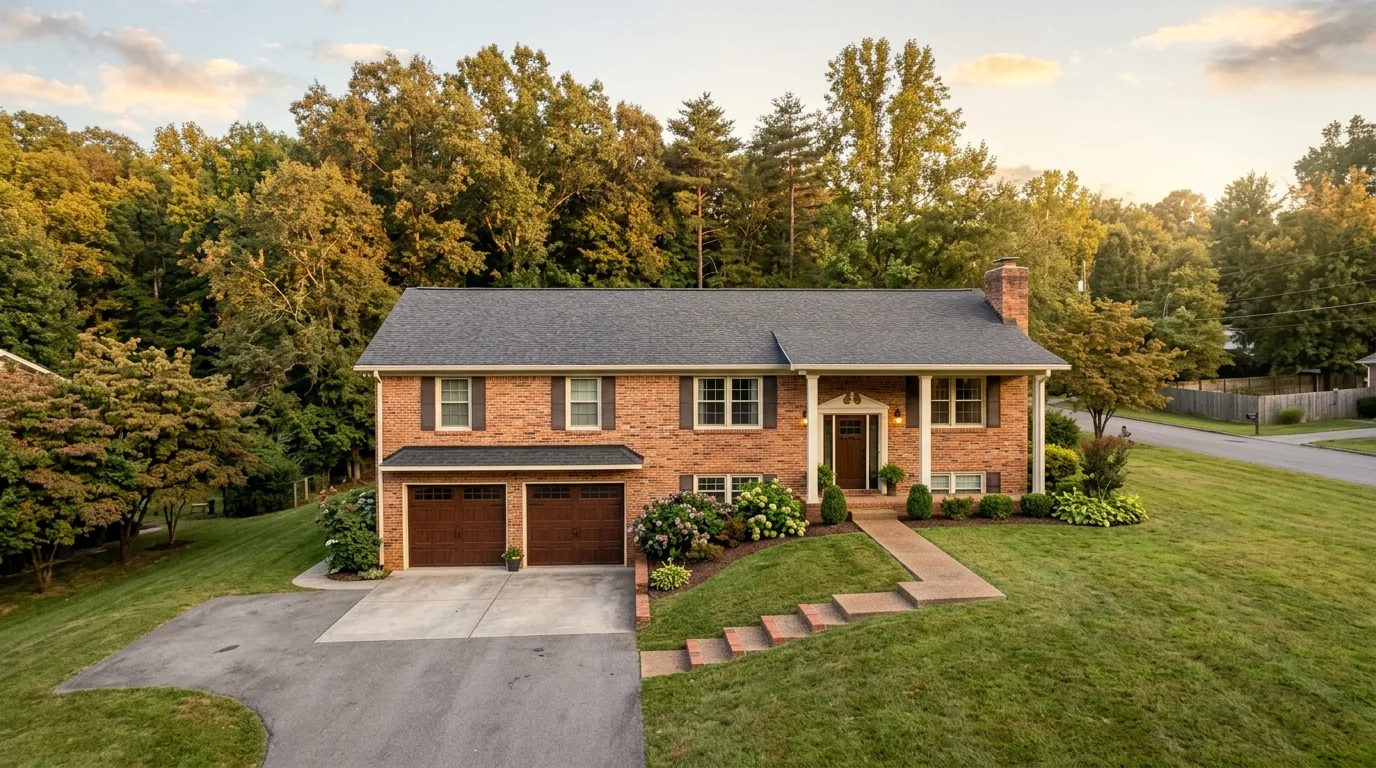
Service Area · Knox County
Foundation repair in John Sevier, TN
John Sevier is a small Knox County community of roughly 833 residents sitting on steeply sloped Dewey silt loam soils that erode and shift with seasonal rainfall. Those soil conditions, combined with older East Tennessee housing stock, put many homes here at elevated risk for settlement, cracking, and wall movement. A professional inspection is the first step toward protecting your home's structural integrity.
Why John Sevier Foundation Repair Is Different
John Sevier sits in Knox County along the southeastern edge of the Knoxville metro, a small community of roughly 833 residents where the terrain does most of the damage long before a homeowner notices a crack in the drywall. The soils here are predominantly Dewey silt loam and Dewey loam mapped at 15 to 40 percent slopes, many of them already in an eroded condition according to USGS SSURGO soil data via Soil Data Access. That combination, steep grade plus fine-grained, moisture-sensitive soil, creates a foundation environment that punishes both old and new construction. Understanding what is working against your home’s footing is the essential starting point for any repair conversation.
Soil and Geology
The Dewey series is a silty clay loam derived from cherty limestone residuum common to the Ridge-and-Valley section of the Appalachians. It behaves very differently from the expansive red clays found in Middle Tennessee, but it carries its own risks. At slopes of 25 to 40 percent, water does not pond, it moves. Sheet erosion steadily removes the fine particles beneath and around footings, creating voids that allow settlement. Even on gentler slopes of 2 to 12 percent, the Dewey-Udorthents-Urban land complex includes disturbed fill and urban land units, meaning the soil beneath some John Sevier homes is not native Dewey at all but graded fill of mixed and uncertain density.
According to Wikipedia’s article on Expansive clay, soils prone to large volume changes tied to water content demand deep foundations or pile systems extending beyond the affected soil depths. While Dewey series soils are not the highest-plasticity clays in Tennessee, their silt fraction makes them sensitive to seasonal moisture swings, and their eroded condition on steep slopes means less cohesive material is present to resist lateral movement beneath a footing.
Climate
John Sevier sits within the broader Knoxville climatic zone. Wikipedia’s Knoxville article notes the city receives just under 52 inches of annual precipitation, with a January average of 38.2 degrees Fahrenheit and a July average of 78.4 degrees. That rainfall total, distributed unevenly across freeze-thaw winter months and heavy spring storms, means John Sevier soils go through repeated saturation-and-drying cycles each year. Each cycle that saturates a sloped Dewey loam lot risks washing fine particles from beneath footings. Each dry period that follows allows small voids to form. Over years and decades, those cycles accumulate into measurable foundation movement.
Housing Era
The broader Knox County unincorporated belt, which includes John Sevier, contains a mix of mid-century pier-and-beam homes built when the area was rural and newer construction on subdivided lots. Older homes often have original wood framing, minimal site drainage infrastructure, and footings poured before modern soil-testing requirements. Newer homes built on previously graded or filled lots face a different set of risks tied to fill compaction and disrupted drainage patterns. Neither era is immune. The sloped terrain and the eroded soil condition documented in the SSURGO data apply regardless of when the home was built.
John Sevier Neighborhoods and Foundation Patterns
The community lacks formally platted neighborhood names in most data sources, but residents and contractors recognize distinct corridors with their own terrain and housing patterns. Understanding which area your home sits in helps a contractor prioritize what to inspect first.
- John Sevier Highway Corridor. The spine of the community, with commercial and residential structures on fill pads graded to accommodate a relatively flat roadway. Fill depth varies and can conceal voids beneath slabs.
- Sevier Heights. Residential lots on elevated terrain above the highway corridor. Steeper grades here place homes in the 25 to 40 percent Dewey loam slope category, the highest erosion-risk designation in the SSURGO data.
- Loves Creek Area. Properties near Loves Creek drainage corridors face episodic flood saturation followed by rapid drying. That cycle is hard on both slab and pier-and-beam foundations.
- Chapman Highway Vicinity. Transitional area between John Sevier and the broader Knoxville southeast corridor. Mix of older pier-and-beam homes and slab additions built at different grades.
- Forks of the River Industrial District Edge. Residential parcels adjacent to industrial land uses may sit on disturbed or previously graded soils classified in the Udorthents component of the Dewey-Udorthents-Urban complex.
- Holston Hills Adjacent. Homes near the Holston Hills boundary tend toward mid-century construction on sloped lots with original footings that predate modern drainage codes.
- Sevier Lake Neighborhood. Lower-elevation properties near Sevier Lake carry hydrostatic pressure risk during high-rainfall periods, particularly relevant for basements and block-wall foundations.
- Old Sevierville Pike Corridor. Rural-residential mix with older farmhouses. Many have crawl spaces on block piers that have not been inspected or ventilated in decades.
- Dutch Valley Road Area. Gently rolling terrain with a higher proportion of post-1980 construction, though disturbed fill is still common on subdivided lots carved from former agricultural land.
How to Find a John Sevier Foundation Repair Contractor
Finding the right contractor in a small Knox County community takes more than a Google search. Because John Sevier is unincorporated, there is no city-level contractor registration to cross-reference. Use these four evaluation criteria to separate qualified professionals from those who may not be prepared for local soil conditions.
Warranty terms tied to specific repair methods. A reputable contractor will offer written warranties that specify what is covered, for how long, and whether the warranty transfers to a future buyer. Ask whether the warranty covers both materials and labor, and get the exclusions in writing. Warranties that cover only materials but not workmanship provide limited protection on a sloped Dewey loam lot where soil movement could shift a pier within months of installation.
An engineering letter or structural report. On sloped lots with eroded soils, a repair plan that is not backed by an engineer’s assessment is incomplete. An engineering letter documents the cause of the problem, the recommended fix, and the load calculations supporting the repair design. This documentation also satisfies mortgage lender and title company requirements if you sell or refinance. Ask any contractor you interview whether they work with a licensed Tennessee structural engineer and whether that engineer’s report is included in the quote.
Local-experience specificity. Ask contractors directly about their experience with Dewey series soils and sloped-lot conditions in Knox County. A contractor who can explain how eroded silt loam on a 30 percent grade behaves differently from flat clay soils in West Knoxville is demonstrating genuine local knowledge. References from completed jobs within a few miles of John Sevier are more useful than a long list of Knoxville city projects.
Diagnostic discipline before any proposal. A trustworthy contractor will not quote a repair scope after a 15-minute walkthrough. Proper diagnosis involves probing the soil, checking the full perimeter, inspecting interior walls and floors for crack patterns, and assessing drainage flow. If a contractor arrives with a price before completing a thorough inspection, that is a signal to keep interviewing. Review the common foundation problems homeowners face to understand what a thorough diagnostic process should uncover.
What to Expect from a John Sevier Foundation Inspection
A qualified inspector will work through four areas systematically. Knowing what they are looking for helps you participate in the process rather than wait for a summary at the end.
Exterior walk-around. The inspector examines the foundation perimeter for cracks, spalling, displacement, and efflorescence. On a sloped John Sevier lot, they pay particular attention to the uphill side of the structure, where water accumulates before draining, and to the downhill corners, where settlement and wall rotation tend to appear first. Grading, gutter discharge points, and any visible erosion channels are noted.
Interior walk-through. Inside the home, the inspector looks for cracked drywall, sticking doors and windows, sloped floors, and gaps between wall trim and ceilings or floors. These are secondary indicators of foundation movement. The pattern and direction of cracks often tells an experienced inspector which part of the foundation is moving and in which direction.
Crawl space or basement inspection. For pier-and-beam homes common in the older parts of John Sevier, the crawl space inspection is critical. The inspector checks wood beam condition, pier alignment and settlement, moisture accumulation, and ventilation. For the minority of homes with basements, they assess wall bowing, horizontal cracking (a sign of lateral soil pressure), and any evidence of water intrusion.
Slope and drainage assessment. Given the 15 to 40 percent gradients documented in the SSURGO data, a responsible inspector will evaluate how water moves across the lot during a typical rain event. Downspout discharge that empties too close to the foundation on a steep slope is a common and correctable contributor to ongoing erosion beneath footings. Schedule your free foundation inspection in John Sevier to get a written assessment of all four areas.
Repair Methods Used Most Often on John Sevier Homes
The steep, eroded Dewey loam terrain and the mix of pier-and-beam and basement construction in John Sevier shapes which repair methods come up most often. The following list is ordered from most to least commonly applicable for this market. All cost figures come from Bob Vila’s foundation repair cost guide.
- Pier and beam re-leveling and shimming. The most common starting point for older crawl-space homes. Failing or settled wood posts are replaced or shimmed to restore floor level. This method addresses symptoms of footing settlement on eroded slopes without requiring full excavation. See foundation repair methods available for Knoxville-area homes for a full explanation of this process.
- Steel push piers or helical piers. When footings have settled below the bearing zone, driven steel piers transfer load to deeper, more stable strata. According to Bob Vila, piering costs run $1,000 to $3,000 per pier. Sloped lots often require more piers than flat sites because the load distribution is uneven. Review piering cost details for the Knoxville market.
- Crack repair and injection. Concrete and block foundation cracks are stabilized using epoxy or polyurethane injection. Bob Vila reports costs of $250 to $800 per crack. On John Sevier properties, crack repair is rarely a standalone fix. It addresses the symptom while the underlying erosion or settlement issue requires a separate structural solution.
- Wall stabilization and reinforcement. For basement walls showing bowing or horizontal cracking from lateral soil pressure, carbon fiber straps or steel I-beams are installed to stop further movement. Bob Vila cites stabilization costs of $4,000 to $12,000 depending on wall length and severity. Explore foundation repair cost ranges to understand how project scope drives total price.
- Mudjacking and foam leveling. Appropriate for concrete flatwork, driveways, and stoops that have settled, rather than for structural footings. Bob Vila places mudjacking at $500 to $1,300. On sloped lots, the cause of settlement may recur unless drainage improvements accompany the leveling work.
- Crawl space encapsulation and drainage. Not a structural repair by itself, but a critical complement to any pier or beam work on John Sevier properties with moisture-saturated crawl spaces. Controlling moisture beneath the home slows wood deterioration and reduces the soil saturation cycles that accelerate settlement.
John Sevier Building Permits
Because John Sevier is an unincorporated community, there is no John Sevier city building department. Permits for structural foundation repair work fall under Knox County jurisdiction. Homeowners and contractors should contact the Knox County Department of Engineering and Public Works to determine whether a permit is required for a specific repair scope before work begins.
At the state level, the Tennessee Department of Commerce and Insurance, Codes Enforcement administers statewide building construction safety standards under TCA 68-120-101, with adopted codes and standards governed by Rule 0780-2-2. Tennessee follows the International Residential Code framework, which means structural repairs that affect load-bearing components, including foundation replacement, underpinning, or significant pier work, are subject to code compliance and typically require permit documentation.
Working with a contractor who pulls the required permits protects you in two important ways. First, a permitted repair is inspected by a third party, adding accountability to the contractor’s work. Second, permitted work creates a paper trail that satisfies lenders and title companies when you refinance or sell the home. Ask any contractor you consider whether they handle permit applications as part of their standard process.
Other Tennessee Cities Served
John Sevier is one of several Knox County and East Tennessee communities where foundation conditions demand local expertise. If you are researching options for a nearby property, these pages cover neighboring markets in detail.
- Foundation repair services in Knoxville, TN covers the full range of soil types, housing eras, and repair methods across Tennessee’s third-largest city.
- Foundation repair in Seymour, TN addresses conditions in the Sevier County corridor south of John Sevier, where terrain and soil types share similarities.
- Foundation repair in Mascot, TN covers a Knox County community east of Knoxville with its own mix of sloped lots and older housing stock.
John Sevier foundation repair FAQs
Why are foundation problems so common in John Sevier?
How much does foundation repair typically cost in John Sevier?
Do foundation repairs in John Sevier require a building permit?
How do I check a contractor's history before hiring in John Sevier?
Which parts of John Sevier tend to have the worst foundation issues?
Are free foundation inspections available in John Sevier?
What type of foundation is most common in John Sevier homes?
Foundation trouble in John Sevier?
A free on-site inspection with an elevation survey and a written diagnosis. No obligation.