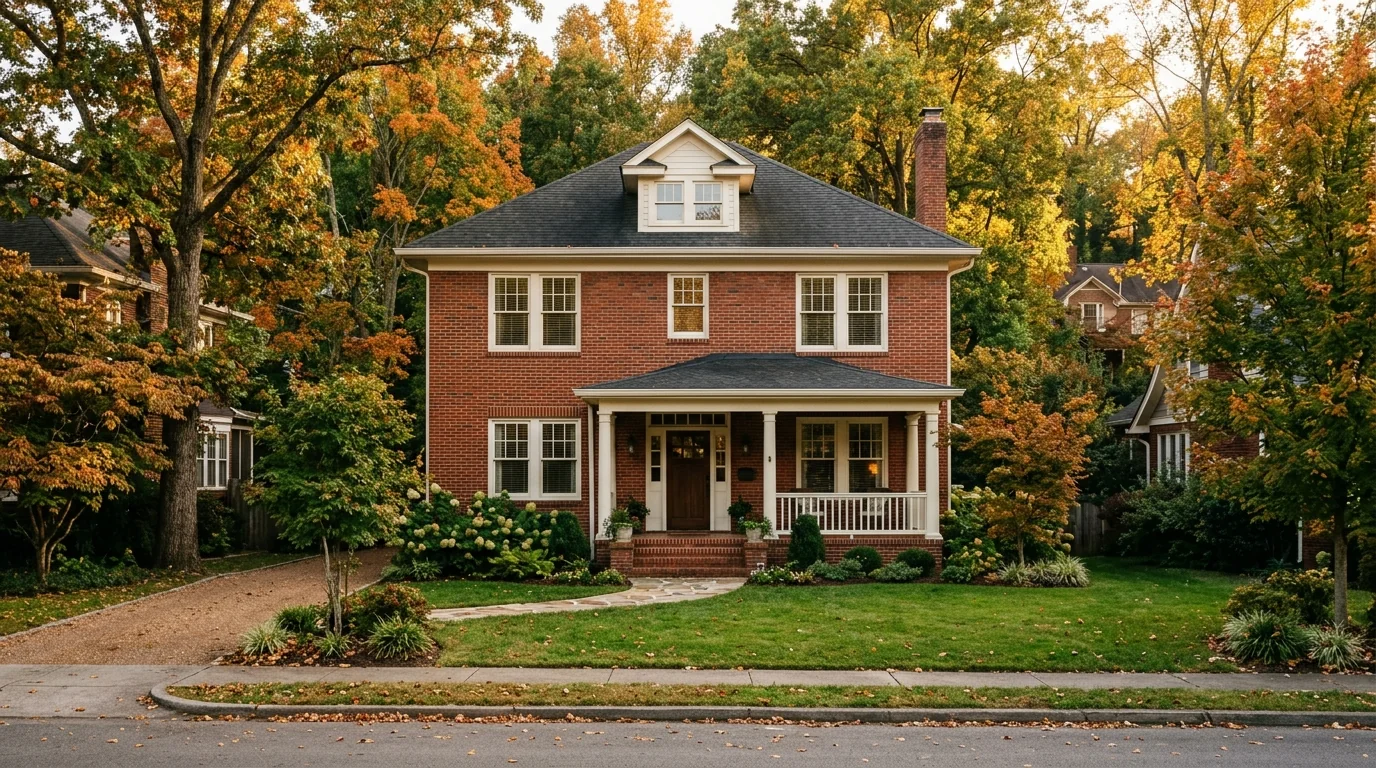
Service Area · Knox County
Foundation repair in Knoxville, TN
Knoxville homes sit on expansive clay soils in the Great Appalachian Valley, where seasonal wet-dry cycles cause foundations to settle, crack, and shift. With a median construction year of 1974 and nearly 12 percent of the housing stock pre-dating 1940, many Knoxville foundations need attention. Free inspections are available throughout Knox County and the surrounding metro.
Why Knoxville Foundation Repair Is Different
Knoxville sits in the Great Appalachian Valley, roughly halfway between the Great Smoky Mountains and the Cumberland Plateau, according to Wikipedia. That geography shapes everything about how foundations perform here. The city rises from about 800 feet at the Tennessee River to over 1,000 feet on western hilltops, meaning a single street can change drainage patterns, slope stress, and soil saturation within a few hundred yards. Combine that elevation variation with expansive clay soils, a wet climate, and a housing stock where the median construction year is 1974, and you have conditions that put constant pressure on footings and slabs. Understanding those layers is the first step toward a lasting repair.
Soil and Geology
USGS soil survey data for Knoxville lists Urban land, Udorthents complex, and steep-slope complexes as the dominant mapped units across the city. Beneath the urban fill and disturbed surface soils, the underlying material is predominantly clay-rich residual soil weathered from the Valley and Ridge formations of the Appalachian system. Wikipedia’s article on expansive clay notes that these soils are “prone to large volume changes (swelling and shrinking) directly related to changes in water content,” and that a plasticity index above 25 percent corresponds to high expansion risk. Knoxville’s residual clays frequently exceed that threshold. When spring rains saturate the clay, it swells against footings and slabs. When summer dry spells follow, the same clay contracts and pulls away, leaving gaps and voids that allow foundations to settle unevenly.
Hilltop locations in neighborhoods like North Hills and Sequoyah Hills also face slope-drainage complications. Water moving downhill through clay soil builds lateral pressure against foundation walls and crawl-space piers. That pressure is described physically by the relationship between soil saturation and hydrostatic force, which Wikipedia’s hydrostatic pressure entry captures as pressure proportional to fluid density and depth. In practical terms, a saturated hillside above a crawl space can push hard enough to displace piers and tilt floor systems over several seasons.
Climate
Knoxville receives just under 52 inches of rain annually and averages a January low near 38.2°F and a July average of 78.4°F, per Wikipedia. Normal snowfall is only 4.6 inches per year, so freeze-thaw damage to foundations is less common than in northern markets. The real driver is the wet-dry cycle. Heavy spring rainfall saturates clay, then the Tennessee summer bakes the surface dry. That oscillation between saturation and desiccation repeats every year, and each cycle moves the soil a small amount. Over decades, small movements accumulate into measurable settlement, stair-step cracks, and doors that no longer close properly.
Housing Era
The median construction year for Knoxville homes is 1974, and approximately 12.4 percent of the housing stock pre-dates 1940. Homes built before World War II often relied on original mortar-set brick piers in crawl spaces, minimal footings, and no engineered drainage. Homes from the 1950s through the 1970s frequently used concrete block foundations or poured-concrete crawl-space walls without waterproofing membranes. By today’s standards, these systems were not built to handle the ongoing soil movement Knoxville’s clay produces. Add five decades of deferred maintenance, and the result is a repair market that is both large and persistent. Even newer subdivisions from the 1980s and 1990s are now showing first-generation settlement issues as their original footings encounter the same clay cycle.
Knoxville Neighborhoods and Foundation Patterns
Knoxville’s distinct topography means foundation failure modes vary considerably by area. The neighborhoods below represent the most common patterns our inspectors encounter across Knox County.
- Fourth and Gill. One of Knoxville’s oldest intact residential districts, with many homes from the 1890s through 1920s. Original pier-and-beam construction on minimal footings is the norm, and settled floors are extremely common.
- Old North Knoxville. Similar era and construction to Fourth and Gill. Narrow lots with mature trees mean root intrusion and inconsistent drainage complicate standard pier repairs.
- Mechanicsville. Post-Civil War neighborhood with a mix of original wood-frame pier-and-beam homes and mid-century concrete block construction. Settlement and lateral wall movement are both present.
- Sequoyah Hills. Upscale hilltop neighborhood with significant grade changes. Slope drainage concentrates water against downhill foundations, producing both settlement and hydrostatic wall pressure.
- Bearden. Largely 1950s through 1970s residential development. Slab and crawl-space homes are mixed. Many homes on the western ridge show differential settlement tied to clay shrink-swell.
- Fountain City. North Knoxville suburb with post-WWII housing and clay fill common on formerly graded lots. Floor bounce and sagging beams are frequent complaints.
- North Hills. Hillside development from the 1960s and 1970s. Steep lots mean erosion-related undermining is an added risk alongside standard clay settlement.
- Inskip. Mid-century suburban development with consistent pier-and-beam construction. Crawl-space moisture and compromised vapor barriers drive much of the call volume here.
- Vestal. South Knoxville neighborhood across the river with a mix of working-class bungalows from the 1920s through 1940s. Small footings, aging mortar, and high groundwater near the Tennessee River all contribute to foundation movement.
How to Find a Knoxville Foundation Repair Contractor
The Knoxville market has no shortage of contractors willing to provide a free estimate, but not all of them bring the diagnostic discipline the local soil conditions demand. Four criteria help separate qualified contractors from those who will sell you a repair that misses the root cause.
Warranty terms that survive a home sale. A transferable warranty adds real value when you sell a Knoxville home, because buyers and their agents will ask about foundation work. Ask every contractor exactly what the warranty covers (materials, workmanship, or both), how many years it runs, and whether it transfers automatically or requires a fee. Vague answers on this point are a warning sign.
An engineering letter for pier work. Any piering or underpinning project that changes the load path of a structure should be accompanied by a licensed structural engineer’s letter stating that the repair design is appropriate for the site conditions. In Knoxville’s varied geology, a contractor who skips this step is guessing at pier depth and spacing. Ask for the engineer’s Tennessee PE license number.
Knoxville-specific local experience. General Tennessee experience is not the same as experience working with the Appalachian Valley’s specific clay profile. Ask the contractor to name the neighborhoods where they have completed comparable projects. A contractor who can describe the difference in soil behavior between a Sequoyah Hills hilltop and a Vestal riverside lot has actually worked this market. One who cannot is likely relying on generic methods.
Diagnostic discipline before recommendations. A qualified contractor will inspect before recommending. They will probe the crawl space, measure floor slope with a level or digital inclinometer, check moisture readings, and document crack patterns before putting a repair method on paper. Contractors who quote piering or waterproofing before completing a thorough inspection are skipping the step most likely to reveal whether a less expensive repair would solve the problem. See common foundation problems and their causes to understand what an inspector should be identifying before any recommendation is made.
What to Expect from a Knoxville Inspection
A thorough foundation inspection in Knoxville covers four areas. Each one matters because the local soil and topography create failure modes that only show up when all four areas are evaluated together.
Exterior walk-around. The inspector checks the foundation perimeter for cracks, displacement, and evidence of water channeling. In Knoxville, they look specifically at downspout discharge points, grading slope relative to the foundation, and any retaining walls that may be transferring hillside pressure. Window wells and egress openings in older homes are common water-entry points.
Interior walk-through. Floor slope, sticking doors, drywall cracks above window frames, and gaps between walls and ceilings all reveal how the foundation has moved. The inspector notes crack pattern direction (diagonal cracks typically indicate differential settlement; horizontal cracks in block walls indicate lateral pressure) and maps findings room by room.
Crawl-space or basement inspection. Most Knoxville homes have a crawl space, and this is where the most critical information lives. The inspector checks pier condition, beam sag, moisture levels, vapor barrier integrity, and signs of wood rot or insect damage. A compromised crawl space in a Knoxville home often explains every symptom seen above grade. If you have questions about what repair work looks like in this space, the foundation repair methods overview covers the options in detail.
Slope and drainage assessment. Because Knoxville’s topography ranges from flat riverside lots to steep hillside properties, the inspector evaluates whether site drainage is directing water toward or away from the foundation. Negative grade (slope toward the house) is one of the most common and correctable contributors to ongoing settlement in Knox County.
Repair Methods Used Most Often on Knoxville Homes
The mix of pier-and-beam construction, expansive clay, and varied topography means Knoxville contractors use several repair methods, often in combination. The following list reflects what shows up most frequently in this market, from most to least common. All cost figures are sourced from Bob Vila.
- Crawl-space pier repair and replacement. Original mortar-set brick piers in pre-1960 homes are replaced with steel adjustable piers or new concrete footings. Cost for piering and underpinning runs $1,000 to $3,000 per pier per Bob Vila. See pier and underpinning options for Knoxville homes.
- Crack repair. Epoxy and polyurethane injection for poured-concrete cracks, and tuck-pointing for brick or block foundation walls. Bob Vila puts crack repair at $250 to $800 per crack. Detailed cost breakdowns are at foundation crack repair costs.
- Crawl-space encapsulation and moisture control. Heavy-duty vapor barriers, interior drainage channels, and sump pump systems address the high moisture levels common in Knoxville crawl spaces. Bob Vila cites crawl-space encapsulation within the broader stabilization and waterproofing range of $4,000 to $12,000.
- Wall stabilization and reinforcement. Concrete block walls in Mechanicsville and Vestal era homes sometimes bow inward from lateral soil pressure. Carbon fiber straps or steel wall anchors arrest movement without excavation. Bob Vila prices stabilization at $4,000 to $12,000 depending on wall length and method.
- Mudjacking and polyurethane foam lifting. For settled concrete slabs in post-1990 homes and driveways, foam or slurry injection raises and levels the slab. Bob Vila lists mudjacking at $500 to $1,300. See the full foundation repair cost guide for side-by-side method comparisons.
Knoxville Building Permits
Foundation repair permits in Knoxville are governed by a two-layer system. The City of Knoxville issues permits for properties within city limits, while Knox County handles permitting for unincorporated areas of the county. The boundary matters because a home in Fountain City or Halls that sits outside city limits falls under county jurisdiction, even though it carries a Knoxville mailing address. Confirm the correct authority before your contractor pulls a permit.
At the state level, Tennessee enforces statewide building construction safety standards through TCA 68-120-101 and adopts the International Residential Code under Rule 0780-2-2, administered by the Tennessee Department of Commerce and Insurance. Structural foundation repairs, including piering, underpinning, and significant crawl-space modifications, fall under these standards and require a permit. Non-structural repairs such as minor crack filling or vapor barrier replacement may not require a permit, but confirming with the applicable jurisdiction before starting any structural work protects both the homeowner and the contractor.
Permit documentation also has practical value beyond legal compliance. A properly permitted repair, with final inspection sign-off from the city or county, becomes part of the property record. That documentation can be presented to a buyer or their lender as evidence that repair work met code. In a Knoxville market where older housing stock is a selling point, having that paper trail converts a repaired foundation from a liability into a documented asset. Start the process by requesting your free foundation inspection so you know exactly what scope of work will require permitting before you engage a contractor.
Other Tennessee Communities We Serve
Knoxville is our home market, but the same clay soils and aging housing stock that affect Knox County extend into surrounding communities throughout the metro.
- Homeowners in Powell, TN foundation repair deal with similar pier-and-beam settlement issues on post-WWII residential lots north of the city.
- The Alcoa, TN foundation repair market includes a mix of mid-century housing near the airport corridor and newer construction on graded fill that is showing early settlement.
- Residents in Halls, TN foundation repair contend with the same north Knox County clay profile, often in homes built between 1960 and 1985 that are reaching their first major foundation maintenance window.
Knoxville foundation repair FAQs
Why is foundation damage so common in Knoxville?
How much does foundation repair cost in Knoxville?
Do Knoxville foundation repairs require a building permit?
How do I check a foundation repair contractor's history in Knoxville?
Which Knoxville neighborhoods have the most foundation problems?
Are free foundation inspections available in Knoxville?
What type of foundation do most Knoxville homes have?
Foundation trouble in Knoxville?
A free on-site inspection with an elevation survey and a written diagnosis. No obligation.