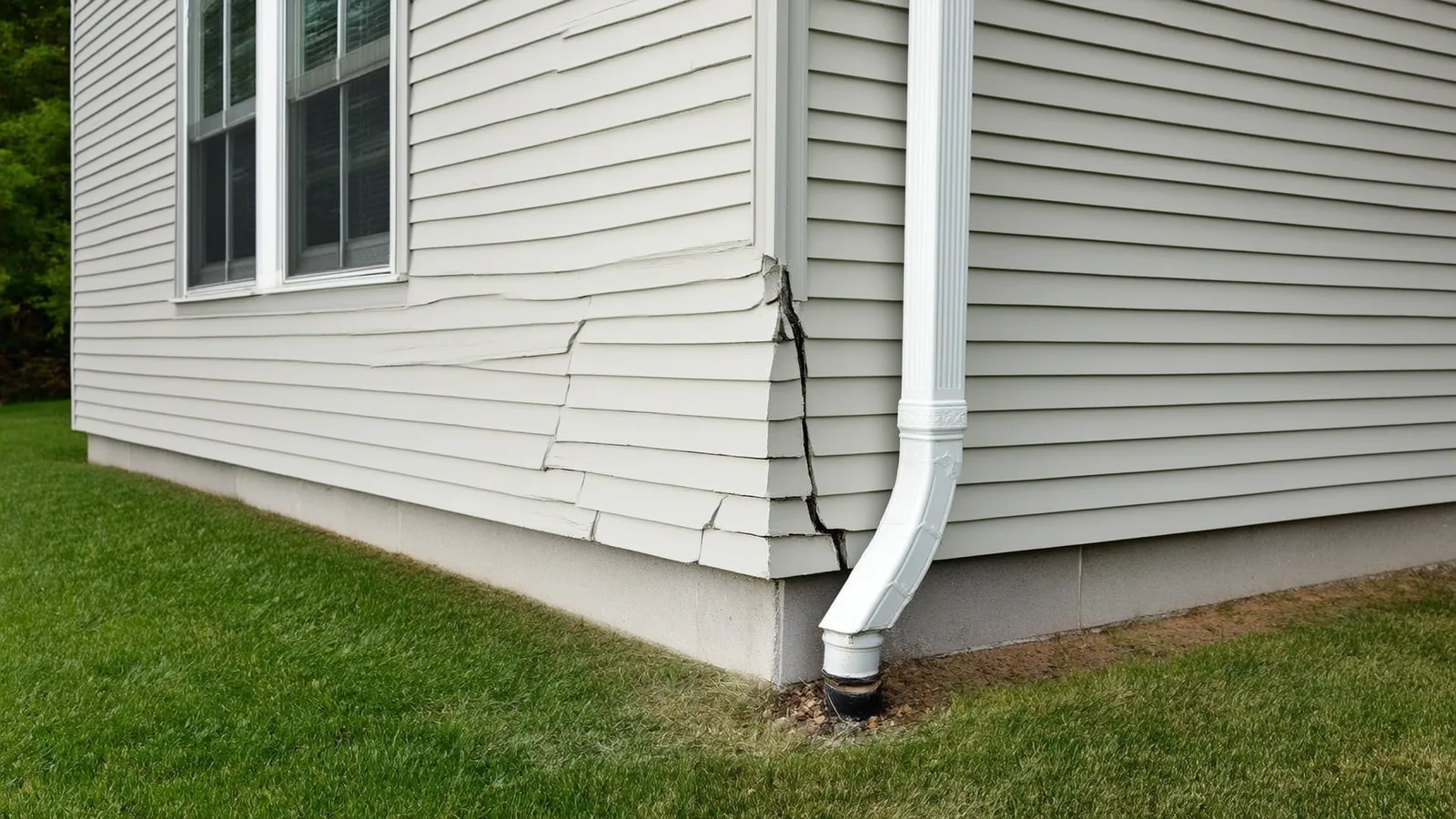
Signs You Need Foundation Repair
Foundation problems show up as stair-step cracks in brick, doors and windows that stick or gap, sloping floors, and water intrusion in crawl spaces or basements. In Knoxville, Knox County karst limestone and shrink-swell clay make these symptoms more likely than in most Southern metros. Catching them early limits repair scope and cost.
Updated Jan 30, 2025 · 6 min read
Your foundation is giving you warning signs right now. Stair-step cracks in brick mortar, doors that suddenly refuse to latch, floors that roll toward one corner, and damp crawl spaces after a rain are all early signals that soil movement is stressing your home’s structural base. In most cases, catching and addressing these signs early keeps repair costs manageable. Ignoring them gives the problem months or years to compound.
The Most Common Warning Signs
Cracks in Walls, Brick, and Drywall
Not every crack means foundation trouble, but pattern and direction tell you a lot.
Stair-step cracks in brick or block follow mortar joints diagonally up the wall. They indicate differential settlement, meaning one section of the foundation has dropped more than another. Gaps wider than 1/4 inch deserve professional evaluation.
Horizontal cracks in poured concrete or block basement and crawl-space walls are the most serious crack type. They indicate that lateral soil or hydrostatic pressure is actively bowing the wall. Left unaddressed, bowed walls can fail.
Diagonal cracks running from door or window corners are a common sign that the frame has raked out of square because the footing beneath it has moved. A single hairline crack in new concrete is usually normal shrinkage. Multiple diagonal cracks at multiple openings is not.
Vertical cracks wider than 1/8 inch, especially when they taper (wider at top, narrower at bottom, or vice versa), suggest uneven settlement rather than normal curing.
Doors and Windows That Stick or Gap
When a foundation shifts, the structural framing above it distorts. Door frames that were perfectly square at installation become parallelograms. You will notice:
- Doors that bind at the top corner when you try to close them
- Doors that drag along the floor threshold
- Windows that are suddenly hard to open or lock
- Visible gaps at the top or bottom of a door that were not there before
The key indicator is timing and clustering. One sticky door in summer can be seasonal wood expansion. Three sticky doors appearing in the same month, accompanied by drywall cracks, is a pattern that points to foundation movement.
Uneven, Sloping, or Bouncy Floors
A floor that slopes more than 1 inch over 20 feet is a common benchmark contractors use to flag differential settlement. You can test this with a long level or a marble. If a marble placed on the floor rolls consistently toward one wall, note the direction and degree.
In crawl-space homes, which are common throughout the Knoxville metro due to the hilly Valley-and-Ridge terrain, bouncy or soft floors can also indicate that support piers or girders have shifted, rotted, or settled into soft soil.
Water Intrusion in Basements and Crawl Spaces
Water entering a basement wall is both a symptom and an accelerant. Saturated soil increases the pressure against foundation walls, which widens existing cracks and can bow walls over time. In crawl spaces, standing water or persistent humidity leads to wood rot and mold, compromising the structural members that carry your floors.
Signs to watch for include white mineral deposits (efflorescence) on basement block walls, visible moisture seeping through cracks after rain, and musty odors coming from floor registers or crawl-space vents.
Chimney Separation and Gaps at Rooflines
A chimney pulling away from the main structure indicates that the footing beneath it has settled independently. Look for a visible gap between the chimney and the exterior wall, or a crack running along the wall where the chimney connects. Similarly, a gap appearing between the exterior wall and the soffit or roofline can mean the wall has shifted downward or outward.
What Makes Knoxville Different: Karst and Clay
Knoxville’s foundation risk profile is distinct from most Southern metros, and understanding why helps you interpret the signs you see.
Knox County sits on extensive karst limestone bedrock (USDA Web Soil Survey, Knox County, Tennessee; Tennessee Geological Survey karst mapping). Karst is topography formed from the dissolution of soluble carbonate rocks such as limestone and dolomite, characterized by sinkholes, caves, and underground drainage systems (Wikipedia: Karst). When subsurface voids enlarge over time, the ground above them can subside suddenly. This means a Knoxville homeowner can face two distinct failure modes: the gradual differential settling driven by clay shrink-swell cycles, and the acute subsidence that happens when soil drops into a solution cavity.
Knox County also carries moderate-to-high shrink-swell clay in valley positions. With nearly 48 inches of annual rainfall (NWS Morristown, KMRX, 1991-2020 Climate Normals), the wet-dry cycles that saturate and then dry out this clay are relentless. Expansive clay expands when it absorbs water and shrinks when it dries, creating a constant push-and-pull against footings and walls (Wikipedia: Expansive Clay).
The Valley-and-Ridge terrain concentrates stormwater runoff at low-lying lot positions. If your home sits at the base of a slope, you are receiving drainage from uphill neighbors. In karst areas, that surface water can interact unpredictably with subsurface voids, complicating both the damage and the repair.
Most pre-2000 homes in Knox County were built on crawl-space foundations, a choice driven by the rolling terrain. Crawl-space homes are particularly exposed to the humidity and soil-contact moisture that accelerates wood rot and pier settlement.
Knoxville experienced significant soil saturation during remnants of Hurricane Helene in September 2024, which caused widespread flooding and saturation-driven tree failures across East Tennessee. Extended saturation events like that one can shift foundations that had been stable for decades.
Signs That Warrant an Urgent Call vs. a Scheduled Inspection
Not every crack requires an emergency response. Here is a practical triage:
Call promptly (within days):
- Horizontal cracks in basement or crawl-space walls, especially with visible bowing
- Any crack that has visibly widened or lengthened since you first noticed it
- Floors that have developed a new slope recently and are still changing
- Sudden appearance of multiple symptoms at once, especially after a heavy rain event
Schedule a professional inspection (within weeks):
- Stair-step brick cracks wider than 1/4 inch that appear stable
- Doors or windows that stick consistently without an obvious seasonal explanation
- Efflorescence or minor seepage on basement walls
- Crawl-space moisture or soft floors without visible structural distress
Monitor and document (next routine inspection):
- Hairline vertical cracks in poured concrete that have not changed
- Minor drywall cracks at a single door or window corner
- Slight floor unevenness in older homes with no other accompanying symptoms
What the Signs Mean for Your Repair Decision
The signs above are a starting point for research, not a diagnosis. Two homes can show identical surface cracks for completely different reasons, and the correct repair method depends on what is causing the movement, not just what the movement looks like.
In Knox County, a contractor who understands karst geology will assess whether helical piers driven to competent bedrock are needed, rather than shallower methods that would still be subject to void-related subsidence. That distinction matters for the longevity of any repair.
Foundation repair costs nationally range from $2,176 to $7,833, with an average around $5,001, according to Bob Vila’s foundation repair cost guide. Projects involving multiple piers or complex karst conditions trend toward the higher end. The sooner movement is caught, the fewer piers or interventions are typically needed.
To understand what a repair would involve for your specific situation, review the foundation problems and causes guide and the Knoxville foundation repair services overview. When you are ready to have someone look at your home, you can request a free foundation inspection.
For a full breakdown of what different repair methods cost, the foundation repair cost guide covers pricing by method with sourced national ranges you can use as a benchmark when evaluating contractor quotes.
Free written inspection
Worried this applies to your home? Get a free inspection.
On-site inspection with elevation survey. Written quote within 24 hours. No obligation.
Questions
Signs You Need Foundation Repair FAQs
What does a serious foundation crack look like?
Can sticking doors really mean foundation trouble?
How fast do foundation problems get worse?
Do Knoxville homes have a higher foundation risk than other Tennessee cities?
Will homeowners insurance cover foundation repair?
How much does foundation repair cost in Knoxville?
Should I get a structural engineer or a foundation repair contractor first?
Free inspection
Talk to a foundation specialist
On-site inspection with elevation survey. Written diagnosis within 24 hours. No obligation.