What This Symptom Looks Like (and When to Act)
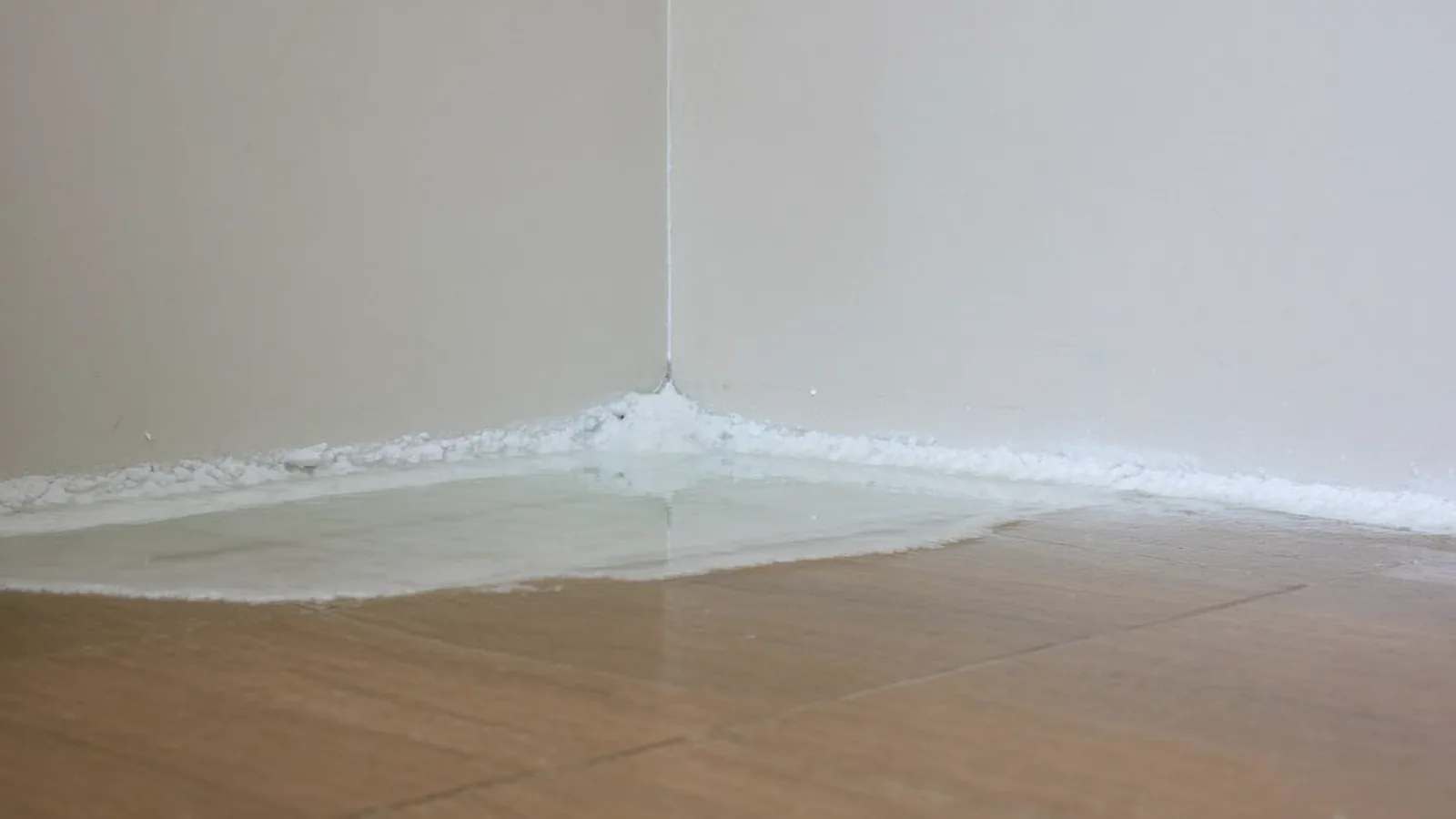
Water showing up in a finished or unfinished basement is one of the most common calls foundation repair companies receive across the Knoxville metro. The symptom can look dramatically different from home to home, and that difference matters for deciding how quickly you need to act.
What it looks like exactly
The most obvious form is standing water on the floor after a heavy rain. More subtle versions include a white chalky deposit (efflorescence) on concrete block walls, damp spots that appear and dry without ever becoming puddles, rust stains below window wells, a persistent musty smell, peeling paint on basement walls, or visible cracks in the floor or wall-floor joint where water seeps in slowly. In finished basements, you may notice the carpet staying damp or drywall at the base of walls developing soft spots before you ever see open water.
When it is a monitor vs. act-now situation
Condensation on cold pipes or walls during humid Tennessee summers is a low-urgency issue. You can monitor it by wiping the surface dry, waiting 24 hours, and checking whether moisture returns from outside the wall (seepage) or forms on the surface from humid air (condensation). Tape a piece of plastic sheeting to the wall and seal the edges. If moisture beads on the outer face of the plastic, the problem is humidity. If it forms behind the plastic against the wall, water is moving through the concrete.
Active seepage through cracks, chronic wet-weather flooding, visible wall bowing, or water entering through the floor-wall cove joint all call for prompt professional evaluation. Water that returns every wet season is doing structural damage in the background even when the floor dries out between events.
What NOT to do
Painting over damp walls with hydraulic cement or waterproof paint is the most common DIY trap. These coatings may hold for one or two seasons but will eventually fail because they address the interior surface rather than the pressure driving water through it. Similarly, adding a dehumidifier without finding the entry point treats symptoms while the underlying cause continues to damage framing, insulation, and the foundation wall itself.
What Causes It in Knoxville, TN
Knoxville’s position in the Great Appalachian Valley gives it a set of water-management challenges that are different from most Southeastern metros. The city sits at elevations ranging from roughly 800 feet at the riverfront to over 1,000 feet on its western hilltops (Wikipedia: Knoxville, Tennessee), and that Valley-and-Ridge terrain concentrates stormwater into low-lying positions where many older homes are built.
Knox County receives close to 48 inches of annual rainfall (NWS Morristown KMRX, 1991-2020 Climate Normals). That volume arrives across all four seasons, with no prolonged dry season that allows soils to fully drain before the next rainfall cycle. Homes in valley positions along the Clinch, Holston, and Tennessee River drainages sit on saturated ground for extended stretches during spring and after significant storm events like the remnants of Hurricane Helene in September 2024, which delivered extraordinary saturation across East Tennessee.
Knox County’s primary soils are residual clay and silty clay weathered from limestone, dolomite, and shale (USDA Web Soil Survey, Knox County, Tennessee). These soils have moderate-to-high shrink-swell potential. When saturated, they press against foundation walls with hydrostatic pressure that increases with depth. According to Wikipedia’s entry on hydrostatic pressure, pressure increases with the density of the fluid and the height of the water column above a given point. A basement wall with four feet of saturated clay against it experiences meaningful lateral force that concrete block, poured concrete, or stone walls must resist continuously.
The signature Knox County complication is karst limestone geology. The Tennessee Geological Survey has documented karst features throughout the county. Solution cavities and subsurface voids beneath the surface can redirect groundwater in ways that defy standard lot drainage expectations. Water that drains away predictably on a soil-only site may pool against a foundation wall or enter through floor cracks above an underground void in Knox County. This is a risk profile that distinguishes Knoxville from pure clay-soil markets like Memphis and makes professional drainage assessment more important, not less, even on lots that appear to drain normally.
Homes built before 2000 in Knox County predominantly use crawl-space or basement construction, given the county’s hilly terrain. Many of those basement walls are concrete block rather than poured concrete, and block walls are more porous to water migration than poured-wall construction.
Repair Methods That Address Basement Water
No single repair method applies to every wet basement. The right solution depends on where the water is entering, what is driving it, and the existing condition of the foundation walls.
Interior drainage systems are the most common solution for Knoxville basements. A channel is cut along the perimeter of the basement floor at the wall-floor joint. A slotted drain pipe is set in gravel below the slab level, and the trench is covered. Water that seeps through the wall or up through the floor is intercepted before it spreads and routed to a collection pit. This approach works with the water rather than trying to stop it at the wall face, which makes it durable even in high-hydrostatic-pressure situations. Read more about how interior drainage systems manage basement seepage.
Sump pump installation almost always accompanies an interior drainage system. The sump pit collects water from the drain channel and the pump ejects it away from the foundation automatically when water reaches a set level. Battery backup units are worth considering in Knox County given the power outages that accompany significant storm events. Learn more about sump pump options and how they are sized.
Exterior waterproofing addresses the problem at its source by excavating soil away from the foundation wall, cleaning and inspecting the wall surface, applying a waterproof membrane or drainage board, improving the footing drain, and then backfilling with crushed stone that drains freely. This is the most thorough approach and the only one that actually prevents water from contacting the wall. It requires significant excavation, temporary landscaping disruption, and higher project cost, which makes it more common on new construction or on properties where interior methods have proven insufficient. Explore exterior waterproofing as a foundation water-control method.
Crawl-space encapsulation applies when the water concern extends to an adjacent crawl space beneath an addition or when the basement opens to a crawl-space area. A heavy-gauge vapor barrier is sealed to walls and piers, and a dehumidifier is installed to control humidity within the sealed envelope. This prevents ground moisture from migrating upward into floor framing. See the full description of crawl-space encapsulation and how it protects floor framing.
Typical Cost Range
According to Bob Vila’s foundation repair cost guide, basement waterproofing costs are part of a broader foundation repair range that averages $5,001 nationally, with most homeowners spending between $2,176 and $7,833 depending on scope. Interior drainage systems paired with sump pumps tend to fall within the lower-to-mid portion of that range. Full exterior excavation and membrane installation pushes project costs toward the higher end or above it, particularly when deep excavation is required around an older Knox County home with established plantings and hardscaping.
Review the Knoxville foundation repair cost breakdown for a method-by-method comparison before your inspection appointment. Having cost context before a contractor arrives reduces the chance that a quote feels surprising.
Inspection Process
A professional basement water inspection for a Knoxville home covers several specific observations. The inspector will walk the exterior first, noting the slope of the grade away from the foundation, the location of downspout discharge points, window well drainage, and any visible soil erosion that indicates concentrated runoff. On a karst lot, the inspector may note surface depressions that suggest subsurface void activity.
Inside the basement, the inspector looks for active seepage points by examining the cove joint along the full perimeter, checking wall cracks for moisture staining and efflorescence deposits, and probing any visible cracks in the floor. Block walls receive additional attention because each mortar joint is a potential entry point. Crack width and pattern are documented. Horizontal cracks in basement walls, particularly in block construction, can signal lateral soil pressure rather than simple shrink-swell cracking, which changes the recommended repair sequence.
Elevation measurements note whether the floor is level, since unlevel floors combined with wall movement may point to a foundation settlement concern separate from the waterproofing issue. In those cases, understanding the broader picture of foundation problems helps prioritize which repair is addressed first.
The inspection report should give you a clear entry-point map, a cause assessment, and a written recommended scope with method options.
When to Skip Repair (or Wait)
Not every instance of basement moisture requires immediate repair. A single puddle that appeared during an extreme weather event, traced to a window well that was overwhelmed, may be resolved by extending the downspout on the adjacent corner and adding a window well cover. If the basement has been dry for years and the single event is clearly tied to an unusual storm rather than a systematic drainage failure, a period of monitoring is reasonable.
Condensation-only cases, where a dehumidifier brings the basement relative humidity below 60 percent and the damp surfaces dry completely, do not require drainage system installation. Improving basement ventilation and sealing the rim joist to reduce humid outdoor air infiltration often solves the problem at low cost.
The honest caution is that many homeowners misclassify active seepage as condensation because the floor dries between rain events. If the moisture corresponds to rainfall or snowmelt timing rather than outdoor humidity levels, that is seepage, and monitoring without repair allows cumulative damage to continue. Request a free inspection and estimate to get a professional read on which category your basement falls into before deciding to wait.